3 Habits That Saved Amy Jordan's Business & Health
Amy Jordan left a senior marketing role at Marvel and opened her first WundaBar Pilates studio in Montrose, California in 2008. She grew it to 11 locations and patented the WundaFormer machine.
Key Takeaways
- Amy defines high performance as thriving, not surviving, and she left a Senior Vice President role at Marvel because the work was all grinding.
- She opened her first studio in 2008 with her savings and credit cards used up and clients sitting on borrowed folding chairs, and she opened a second location about a year and a half later.
- Block scheduling gives each day of her week one kind of work, with Thursdays kept open for research and product development.
- She stopped being the bottleneck by documenting processes and trusting her team, who she says now do most of the work better than she could.
In this illuminating conversation, Amy Jordan, founder of WundaBar Pilates, shares her remarkable journey from entertainment executive to innovative fitness entrepreneur. Discover how she transformed her passion for movement into a thriving business while overcoming personal challenges, developing high-performance habits, and creating groundbreaking fitness products that serve others.

Introduction
What does high performance truly mean in today's fast-paced entrepreneurial world? For Amy Jordan, founder of WundaBar Pilates, it's about "thriving, not surviving", finding joy and purpose in your work rather than simply grinding through endless tasks.
After transitioning from a senior marketing role at Marvel to founding a nationwide Pilates empire with 11 locations, Amy has discovered that true high performance comes from balancing ambition with intention, trusting others, and focusing on what truly matters. Her journey offers valuable insights for entrepreneurs seeking both business success and personal fulfillment.
In this article, we'll explore Amy's transition from corporate entertainment to entrepreneurship, her innovative approach to Pilates equipment design, and the high-performance habits that have helped her build multiple successful businesses while prioritizing her health and family.
From Entertainment Executive To Fitness Innovator
Amy's entrepreneurial journey began after years in the entertainment industry, culminating in a role as Senior Vice President at Marvel overseeing marketing. Despite the glamour of the position, she found herself grinding rather than thriving.
"It was super glam but just not the job that was filling my soul," Amy explains. "There was a lot of grinding and not a lot of thriving, not a lot of serving others."
The turning point came when she discovered Pilates through classes advertised in the Daily Variety. What started as a hobby quickly evolved into a passion that would transform her career path. In 2008, Amy opened her first WundaBar Pilates studio in Montrose, California, her hometown.
With no prior experience running a company, she dove headfirst into entrepreneurship. She recalls the early days with humility: "I went down to the very bottom of all savings, all credit cards, and I borrowed my friend's mom's folding chairs. That's what the clients sat on when they first came in."
This leap of faith required:
- Releasing perfectionism: "It wasn't going to look the exact way I wanted it to, the exact way I knew that it would one day, and I had to just rip that bandaid off, open doors, and go for it."
- Self-belief: "I will make this work. I am smart, I am hardworking, I want to help and serve others. These are all ingredients that are going to help you succeed."
- Financial risk: "I got down to $217 in my bank account. When I say I went all in, I went all in."
Despite these challenges, the studio was successful right away, and within about a year and a half, Amy opened her second location. This rapid expansion required building a team she could trust, a theme that would become increasingly important throughout her entrepreneurial journey.
Innovating In A Traditional Industry
What truly sets Amy apart is her innovative approach to Pilates equipment. Coming from an entertainment and marketing background rather than the traditional Pilates hierarchy gave her the freedom to reimagine the practice for modern needs.
"I'm deeply inspired by the work Joseph Pilates did, but I'm going to bring it into the future and make it better," Amy explains. This innovative mindset led her to patent the WundaFormer machine, which incorporates four Pilates machines into one: a ballet bar, jump board, reformer, and Wunda chair.
Later, Amy developed the WundaCore resistance ring, which improves upon the traditional Pilates ring that "hasn't been fixed or changed in over a hundred years." This innovative tool helps online clients achieve proper alignment when an instructor can't physically adjust them.
Her creative approach stems from her desire to serve clients better:
"I would watch people walk in like this, the weight of the world on their shoulders, they walk out and they're ready to get back at it. I really found an area where there was a need, not only for Pilates and movement... but also in how we approach it from the inside out."
This inside-out philosophy differentiates WundaBar from other fitness programs:
"We're not about six-packs, we're not about holding a certain shape, we're not about anything from the outside in. We focus everything from the inside out, and what that does is help people move through stuck emotions, helps people move through stuck joints."
For entrepreneurs, Amy's story illustrates how fresh perspectives can revolutionize traditional industries. By focusing on solving real problems for clients rather than adhering to conventional approaches, she created unique value in a crowded marketplace.
Your first hire, what to hand off first, and how to buy your time back.
High-Performance Habits That Prevent Burnout
Despite her entrepreneurial success, Amy admits that she only recently discovered the power of structured habits and intentional goal-setting. Working with an executive coach (which is how she met the podcast host, Nathan) has transformed her approach to high performance.
"It's taken me until the last year and getting an executive coach... that's what's really allowed me to continue to propel myself forward by setting up those habits and setting up those thresholds and markers for how I spend my time and where I spend my energy."
Amy shared several key high-performance habits that have changed her business and life:
1. Block Scheduling For Maximum Focus
Rather than letting her inbox dictate her day, Amy now uses block scheduling to organize her week:
- Mondays and Fridays: Teaching classes
- Tuesdays: Podcasts appearances and shoots
- Wednesdays: Meetings
- Thursdays: Open creative time for research, product development, and testing prototypes
"This has really brought a lot more peace and a lot more productivity into my life by structuring and organizing my time in a way that I wasn't before," Amy explains.
2. Eliminating Multitasking
Amy had an epiphany about the myth of multitasking:
"I used to think that was a superpower, and now I know that's an absolute lie. It is not a superpower to multitask... I would spend so much time ping-ping-ping-ping-ping from tab to tab to tab looking at all these different emails, and then I'd be talking to one of my children, and then I would be starting to put dinner on the stove... and I'm doing all of it really poorly."
Now she creates clear boundaries between work time and family time, keeping her phone in another room when she's with her children after school.
3. Daily Goal Review
Amy emphasizes the power of reviewing goals daily: "Subconsciously then it creates actions that support those beliefs and those goals."
She admits that she once dismissed goal-setting as "just for people who aren't actually doing the work," but now understands its transformative power. This practice helped her expand her product line beyond initial targets, she's launching seven new products this year instead of her original goal of five.
4. Delegating And Trusting Others
Perhaps most challenging for many high-achievers, Amy had to learn to delegate and trust her team:
"I used to have a limiting belief that I was the only one who could handle all those questions in the inbox, the only one who could tell the new studio manager how high the mirror had to go off the wall... That's ridiculous."
By documenting processes and empowering her team, Amy removed herself as a bottleneck in her company's growth. "My team is doing incredible work, they're doing better than I could for most of it."
This shift became particularly important after Amy battled and beat cancer in 2020 during the COVID-19 pandemic. This experience forced her to rely on others and taught her valuable lessons about control and priorities.
"Since that time, everything goes through the filter of: Was this worth that fight? Is this project worth what I went through to be on the other side?"
Balancing Entrepreneurship And Family Life
As a mother of two, Amy has developed strategies to balance her entrepreneurial ambitions with family responsibilities. She emphasizes that work-life integration requires intentionality:
"When it is after-school pickup time, if I have my kids, my team knows that's not going to be the best time to reach me... My phone is typically away from me in another room by design, my computer is closed, because I really do want to be available to them."
Amy models the behavior she wants to encourage in her children:
- Reading books
- Taking walks together
- Looking up recipes to cook together
She also applies the same grace she gives her team to family life, embracing the philosophy that "80% done is 100% awesome":
"Even if my kids help in the kitchen and they do the dishes... your instinct is to be like, 'Oh, you left a pot on the stove,' or 'Oh, why are there still napkins on the table?' Instead, it's like, 'Whoa, hold up. They just did 90% of the work in here. I can, with a smile on my face, pick up the napkins and wash one pot.'"
This approach allows her to maintain high standards while avoiding perfectionism and burnout.

Conclusion: Finding Work That Doesn't Feel Like Work
When asked what advice she would give to aspiring entrepreneurs, Amy emphasizes passion and purpose:
"As you're starting out or considering the idea of entrepreneurship, I think it's really important to understand that it is going to be work that in some ways is consuming. It's going to be on your mind, it's going to be on your heart, it's going to be where you need to take your feet and your actions."
Because of this intensity, she recommends finding something that truly lights your soul and spirit up:
"When I come in here and teach, I have the best time. It's like some of the best, my most favorite work time because I love it, and it doesn't feel like I'm coming into work like, 'Oh God, I have to teach.' It doesn't feel that way when I go shoot and teach classes online or even building social media content... because I love anatomy, I love movement, I love serving others, I love Pilates."
This passion has allowed Amy to build a thriving business while modeling fulfilling work for her children. She encourages them, and all entrepreneurs, to "lean into whatever lights them up rather than a certain GPA or a certain sport... lean into what they love and not spend time doing anything that doesn't serve you."
Amy's final words of wisdom reinforce her holistic approach to business and life: "Movement heals. If you're feeling stuck emotionally, if you're feeling stuck physically, start moving, and that's going to get you on the path where you want to go."
Common Questions
What Is Block Scheduling And How Does A Business Owner Use It?
Block scheduling means giving each day or block of time one kind of work. Amy Jordan teaches on Mondays and Fridays, does podcasts and shoots on Tuesdays, holds meetings on Wednesdays and keeps Thursdays for creative work.
Is Multitasking Good For Productivity?
Amy's view is that it is not. She used to think multitasking was a superpower and now calls that a lie, because she was doing everything poorly. She keeps her phone in another room when she is with her children after school.
How Do I Stop Being The Bottleneck In My Own Business?
Amy had to drop the belief that she was the only one who could answer every question. She documented her processes and handed the work to her team.
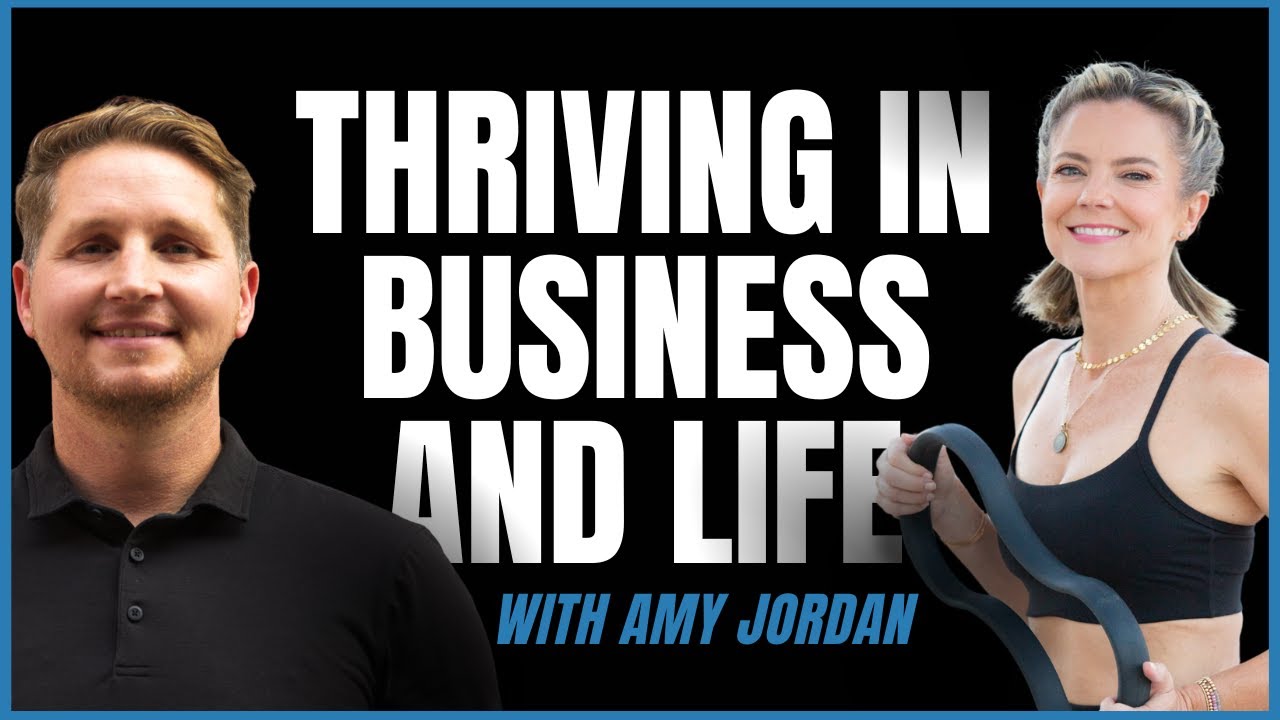 Watch The Full InterviewOn YouTube
Scale Your Business So It Funds Your Calling
If everything in your business still runs through you, join the Impact Freedom Accelerator or grab the free tools I use with members.
Want 1:1 Help? Talk With Me First
Nathan Newberry is a business advisor, sales leader and former pastor. He helps Christian owners of established businesses scale so the business makes more money, needs less of them, and funds their calling. He built and sold a marketing agency, has interviewed hundreds of business advisors, and leads the Impact Freedom Accelerator. More about Nathan