How He Built a Top 2% Podcast (After 100+ Episodes Failed) ft. Dr. William Attaway
Executive coach for over 30 years, lead pastor of a church outside Washington DC for almost 21 years, author, and host of the Catalytic Leadership podcast. About 60 percent of his coaching clients are in the digital marketing agency space, the rest range from Amazon executives to the COO of a 29 billion dollar public company.
Key takeaways
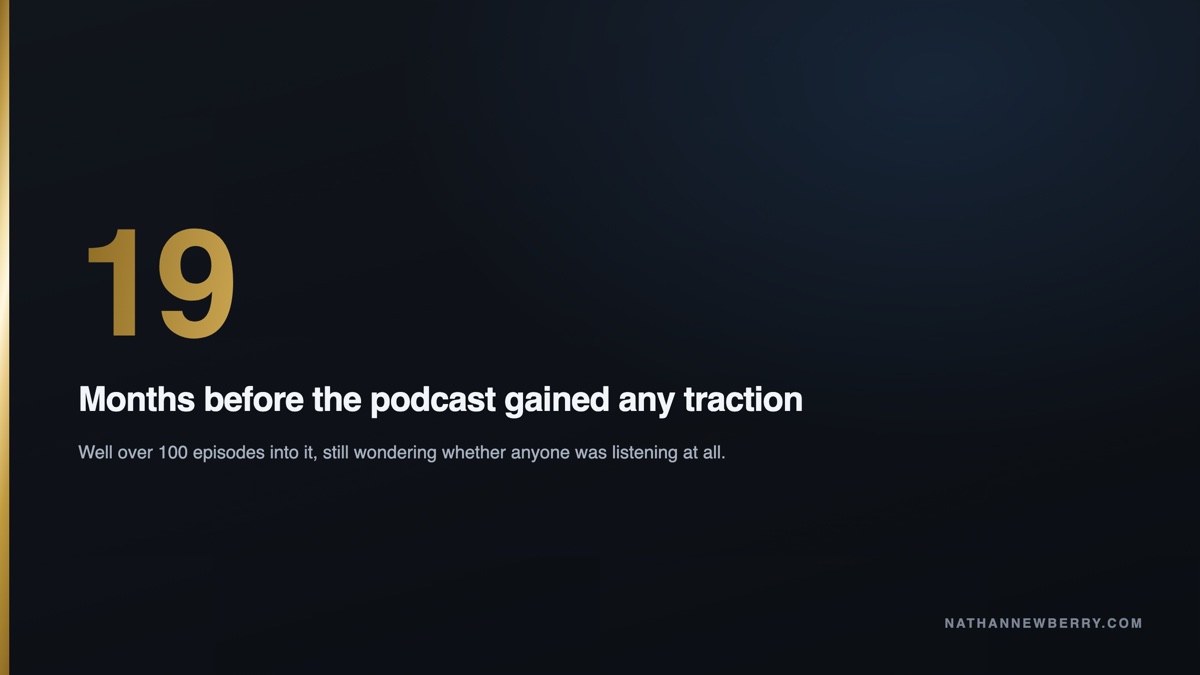
- The show took 19 months and well over 100 episodes to gain any traction, and is now approaching 250 episodes in the top 2% worldwide
- He has never missed a week, and he adjusted frequency by season rather than chasing more output when three a week proved too many
- His agency client with team tenure measured in weeks did not have a systems problem, he had a trust problem, and high team churn produced high client churn every time
- Peter Drucker's question, who is doing what, becomes usable when you add by when, and clarity at the end of a meeting is what makes accountability light instead of heavy
- He hires on five C's in order: character, commitment, chemistry, competency, culture, and character is the one he will not compromise on
Nineteen months. Well over a hundred episodes. No traction at all.
That is what building a top two percent podcast actually looked like from the inside, and Dr. William Attaway is unusually willing to say so out loud.
He has been an executive coach for just over thirty years. He has also been the lead pastor of a church outside Washington DC for almost twenty one years. About sixty percent of his coaching clients are in the digital marketing agency space, and the other forty percent runs from Amazon executives to the COO of a twenty nine billion dollar public company.
THE PART NOBODY POSTS ABOUT
He is now three years in, heading into a fourth season, approaching two hundred and fifty episodes, and sitting in the top two percent of shows in the world.
None of that was true in season one, or even halfway through season two.
That's 19 months of wondering if anybody is listening.
His words for it were asking whether it was just going out into the void, whether there was a black hole somewhere sucking all of it up. That is the honest description of the stretch that most people quit inside.
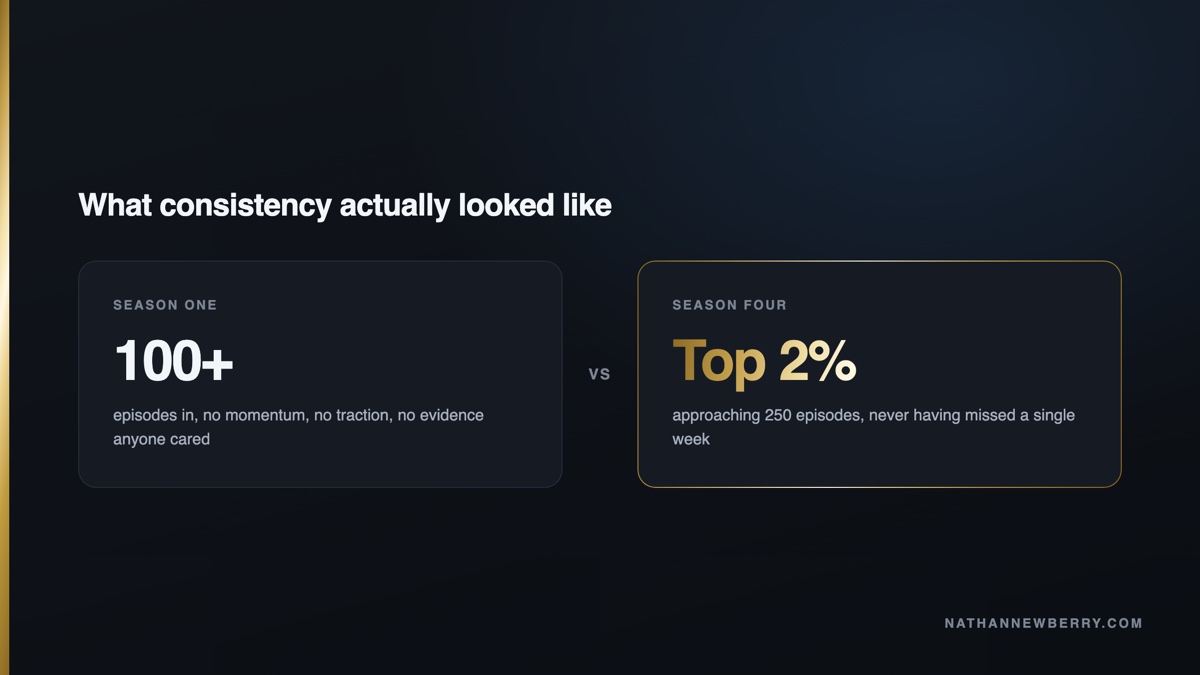
What carried it was not a strategy change. They have never missed an episode. Season one was one a week. Season two went to two a week. Season three started at three, they evaluated, decided it was too much, and dropped back to two.
That last detail matters more than it looks. Consistency is not the same as maximum output. He adjusted the load until it was something the team could hold every single week, and then held it.
HE WAS DOING EVERYTHING AT THE START
It is worth naming what changed on the production side, because the current setup is not the reason it worked.
Today he has a COO he has worked with for almost eight years, and a podcast producer who handles the episodes, the social clips, the reels, the stories, the graphics and the guest communication. His involvement ends when he stops the recording.
That is season three. Season one he did all of it himself. The order was consistency first, then the team that made consistency cheaper.
THE AGENCY THAT WAS A DUMPSTER FIRE
The best story in the episode is a client whose average team tenure could be measured in weeks.
Not months. Weeks.
High churn on the team, and inevitably high churn with the clients, which William says follows a hundred percent of the time. The client's own description of the situation was a dumpster fire.
So they started looking, and this is where it gets interesting. The systems were fine. The processes were fine. The SOPs were all there, everything you would normally point at.
The problem was trust. The team did not trust him and he did not trust them.
His framing is that trust is a foundational currency, and that without it you have lost the ability to lead. People were leaving because they did not feel valued or trusted, and people who do not feel valued go find somewhere they will be.
He quoted a guest from his own show that I keep coming back to. Leaders create the weather.
WHO IS DOING WHAT BY WHEN
The fix he starts with is almost too simple to take seriously, which is exactly why most teams do not do it.
Peter Drucker used to say a leader's greatest task is determining who is doing what. William adds two words. By when.
Every meeting should end with complete clarity on who is doing what by when. Five tasks, five lines, everybody gets a copy emailed afterwards.
Here is the failure mode when you skip it. The leader asks someone whether the thing due today is done. That was mine? I didn't know that was today. I haven't started.
What happens next is the damaging part. The leader now files that person as unreliable, and that judgement follows them for the rest of their time at the company. You have seen it and you cannot unsee it.
It was never unreliability. It was confusion. Clarity is what stops confusion from getting mistaken for character.
He also recommends Patrick Lencioni's Death by Meeting on this, and the specific trap it names: trying to accomplish the purposes of four different meeting types inside one sixty minute block. Meeting stew, and it does not taste good.
Score your life one to ten in eight areas, and find out what to fix first.
THE FIVE C's, IN ORDER
Most people hire for skill, hope the character is fine, and hope the culture fit works itself out. William inverts it.
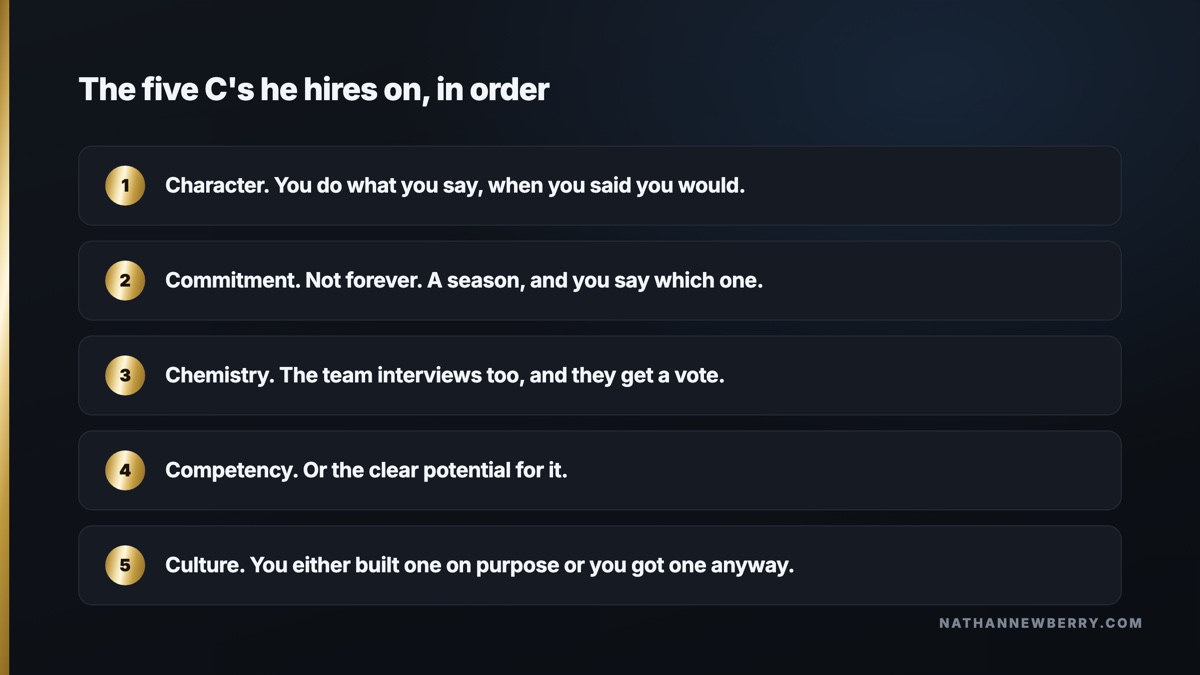
Character is non negotiable, and his definition is refreshingly concrete. You do what you say you are going to do when you say you are going to do it. His line was that there are plenty of places you can do character reclamation, and his team is not one of them.
Commitment is a season, not a lifetime. He is explicit that he is not asking anyone to stay until Jesus comes, but he is also not training someone who leaves in two months for another dollar down the street. So it gets discussed in the interview rather than assumed.
Chemistry is assessed by the team, because the team is part of the interview. Two reasons. They are the ones who will spend every week with this person, and they will catch things you miss.
Competency he treats more loosely than most. He prefers hiring people early in their journey and training them into the role, rather than untraining what they think they learned somewhere else. Potential counts.
Culture is the one people treat as a token word. His point is that you have a culture either way. You either built the one you meant to and now protect it, or you got one you did not choose.
LEADERSHIP IS A SKILL, NOT A GIFT
I told him about running a recruiting office in my early twenties and not leading it well, and being told that maybe it just was not my gift.
He sees that belief constantly. People shut the conversation down before it starts, saying they are not a leader, that it is not who they are.
His response is that nobody was good the first time they got on a bike. Most of us fell straight over. It is a skill and skills are learned by doing.
He is a strong believer in coaching, and has had coaches for decades. His description of what a coach is for is the cleanest I have heard: helping you go further than you would alone, and faster, and steering you out of a ditch you were already aimed at.
But the doing is not optional. If we only talk about it and you never practise it, that is not leadership, that is academics.
That is the same reason the five stages are sequenced rather than taught all at once, and why the free workshop ends with something to go and run.
THE LID
The reason all of this compounds is what happens when it is absent.
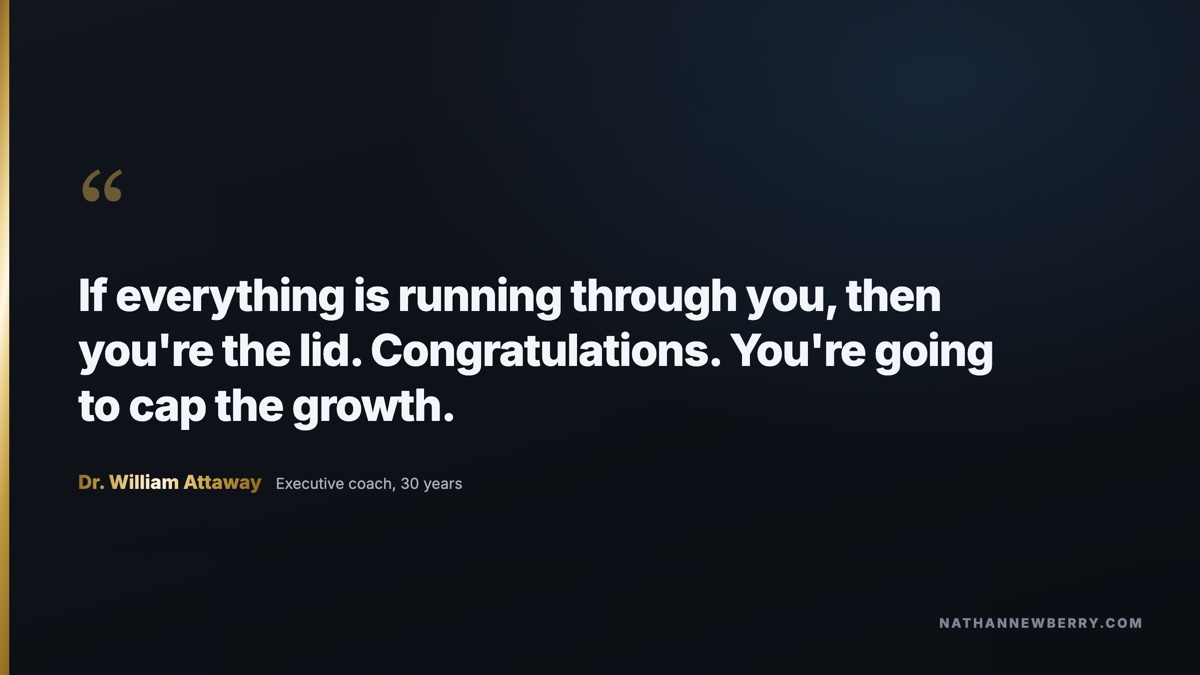
If everything is running through you, then you're the lid. Congratulations. You're going to cap the growth.
He applies it to all three of his worlds. The church, the coaching practice, the speaking. Each has a team, and delegation stopped being optional a long time ago.
The ordering underneath it is deliberate and he teaches it the same way to entrepreneurs and to his congregation. Faith first. Spouse next. Children next. Then everything else. He is pointed about working at a church not counting as the first one, and about what happens when people start playing Jenga with that order.
He also notes something people skip when they compare themselves to him. He would never have attempted this workload fifteen or twenty years ago, because far more was required of him at home in that season. His daughters have since graduated college and high school. The capacity is real, but it arrived with the season.
INFORMATION IS NOT THE SAME AS CHANGE
He reads constantly, goes to conferences, and is in masterminds and coaching himself. None of it is cheap and he budgets for it on purpose.
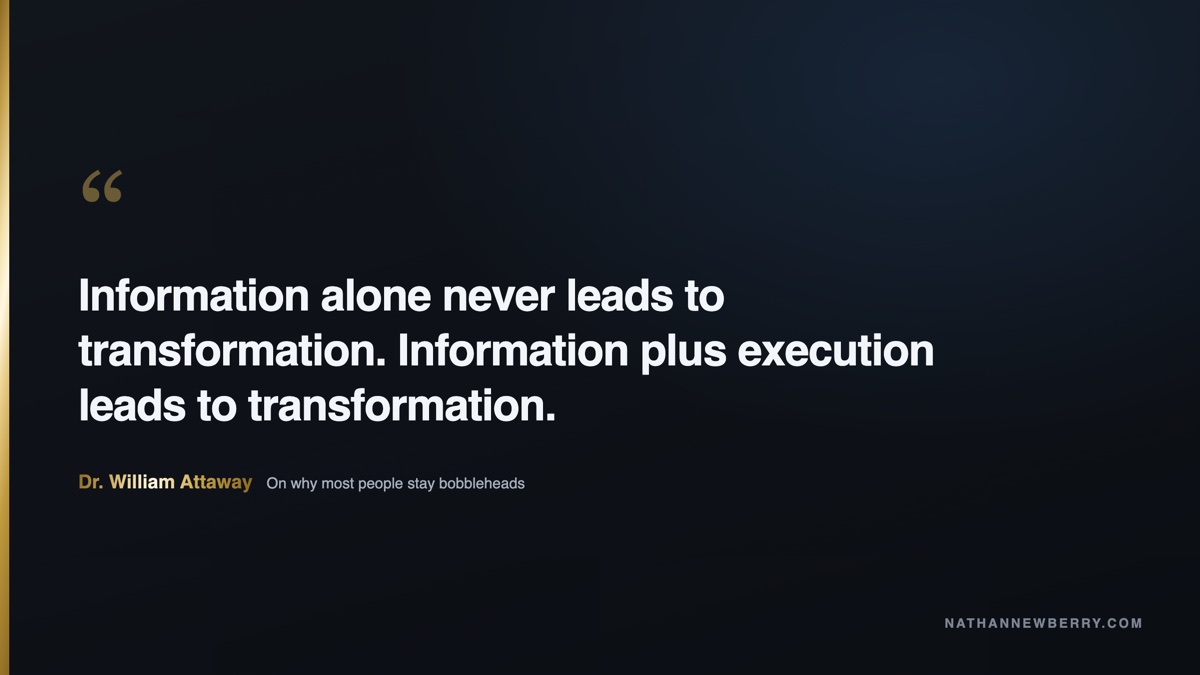
Information alone never leads to transformation. Information plus execution leads to transformation.
His image for the alternative is people becoming bobbleheads. The head keeps getting bigger with more input and the body never moves.
So an input plan needs an execution plan sitting next to it. That is a good filter to run over the next thing you are thinking about buying, and a good one to run over this article too. If you take one thing, take the meeting rule. End the next one with who is doing what by when, in writing, to everyone.
For a straight look at whether the rest of your life can carry the load you are asking it to, the free Life Audit is a ten minute version of the conversation he has with clients.
Questions about this episode
How long should a new podcast take before it gets traction?
William's own show took 19 months and well over 100 episodes before traffic started building. He is direct that you should not expect momentum for a long time, and that the period of wondering whether anyone is listening is the normal experience rather than a sign it is failing.
What are the five C's of hiring?
Character, commitment, chemistry, competency and culture. Character means you do what you say when you said you would, and it is non negotiable. Commitment is a season rather than forever. Chemistry is assessed by the existing team, who take part in interviews. Competency can be potential rather than proven, since he prefers training people early over untraining them later. Culture is whether they fit the one you actually have.
How do you build trust on a team?
His starting point is clarity. Drucker said a leader's greatest task is determining who is doing what, and William adds by when. If every meeting ends with everyone clear on who owns what and by when, accountability stops being a heavy lift. Most broken trust starts as confusion that then gets read as unreliability.
How do you balance a business, a church and a family?
He orders it deliberately: faith first, spouse second, children third, then everything else, and he warns against letting a church job take the place of the first one. Practically it works because he has a team in each area, and because he did not attempt this workload in an earlier season when more was required of him at home.
Build A Business That Funds Your Calling
Two free next steps. Both take one sitting.

Nathan has led sales teams doing seven figures a month and guided more than 100 owners past six and seven figures. He hosts The Nathan Newberry Show and works with Christian business owners on the offer, the pipeline and the systems that carry the work. More about Nathan