Game-Changing Study Method | High Performance Podcast 009
Key Takeaways
- Nathan's Learning Loop pairs the physical book with the audiobook, so you read and listen at the same time.
- He sets the audio to 1.7 to 2 times speed, underlines and makes notes as he goes, and reads for 20 to 45 minutes a day with no distractions.
- At that pace a 150 to 200 page book takes four or five days, which makes 52 books a year possible on about 30 minutes a day.
- For a long book like Principles by Ray Dalio, he breaks it into sections of 50 to 70 pages.
Do you find yourself rereading the same paragraph multiple times, struggling to retain information from books, or feeling overwhelmed by lengthy reads? You're not alone. Despite knowing the immense value of reading, many high performers struggle to efficiently consume and retain the knowledge contained in books. In this post, I'll share my game-changing study method, the Learning Loop, that has allowed me to read dozens of books annually despite not being a "natural reader."
The Reading Retention Problem
As we approach 2024, there's no shortage of incredible books filled with transformative wisdom. My personal library continues to grow with volumes I've purchased specifically to expand my mind and skillset. But here's the challenge many of us face: we love learning but find the actual process of reading books daunting.
If you've ever experienced these common reading obstacles, you're not alone:
- Difficulty getting "in the zone" or achieving flow state while reading
- Rereading the same lines or paragraphs multiple times
- Finishing a page only to realize you have no idea what you just read
- Feeling intimidated by longer books (like Ray Dalio's 544-page "Principles")
- Struggling to retain information after you've finished reading
These challenges aren't signs of intellectual limitation, they're symptoms of using a reading approach that doesn't align with how your brain naturally processes and retains information.
The Learning Loop Method: Multi-Sensory Reading Retention
The game-changer in my reading journey has been implementing what I call the "Learning Loop" method, a multi-sensory approach that dramatically improves comprehension and retention. This method leverages how our brains actually learn by engaging multiple input channels simultaneously.
Here's how the Learning Loop works:
1. Simultaneous Audio And Visual Input
The foundation of this method is pairing the physical book with its audiobook version:
- Purchase both the physical book and its audiobook version
- Read the physical book while simultaneously listening to the audio version
- Set the audiobook playback to 1.7-2x speed to maintain engagement
This dual-input approach creates a powerful synergy, your eyes see the words while your ears hear them, reinforcing the information through multiple neural pathways. The slight increase in audio speed helps maintain engagement without sacrificing comprehension.
2. Physical Interaction With The Material
While reading and listening, actively engage with the text:
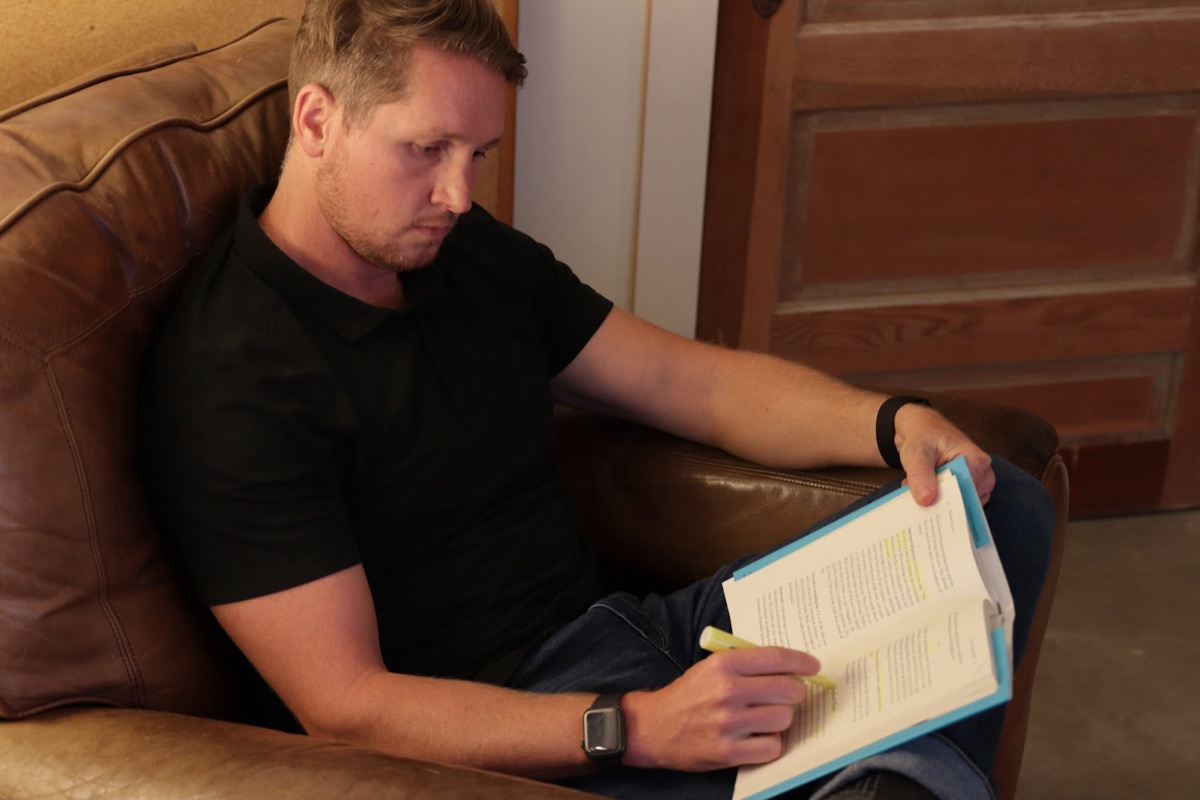
- Underline key concepts and important passages
- Make notes in the margins
- Use sticky tabs to mark sections you want to revisit
- Physically touch the book, turning pages and interacting with the material
This tactile engagement creates another sensory input channel. Research shows that physical interaction with material significantly improves recall compared to passive consumption.
3. Focused, Undistracted Reading Sessions
For this method to work optimally:
- Dedicate 20-45 minutes daily to this practice
- Eliminate all distractions during this time
- Be intentional about focusing solely on the book
- Create a consistent reading environment
This intentional focus creates the conditions for deeper processing and retention. Even short, focused sessions yield better results than longer, distracted reading periods.
Why This Method Works: The Science Of Retention
The Learning Loop method isn't just a personal preference, it's grounded in cognitive science. Learning research shows that information retention dramatically improves when multiple sensory channels are engaged simultaneously:
- Visual processing: Reading the text activates visual processing centers
- Auditory processing: Hearing the words engages auditory learning pathways
- Kinesthetic engagement: Physical interaction with the book activates tactile memory
- Active vs. passive learning: Underlining and note-taking transforms passive reading into active learning
The only additional step that could further enhance retention would be immediately teaching or sharing the content with others, which forces your brain to reorganize and consolidate the information.
Twenty five questions that show you where the business is really stuck.
From Theory To Practice: Implementing The Learning Loop
Let's look at how this method transforms reading in practical terms:
For Standard-Length Books (150-200 Pages)
A typical book of 150-200 pages becomes remarkably manageable with this method:
- At 1.7-2x audio speed, you can cover approximately 40-50 pages in a 30-minute session
- With consistent daily practice, you can complete an entire book in 4-5 days
- This pace allows you to comfortably read 52+ books per year with just 30 minutes daily
For example, a 200-page book like the one mentioned in the transcript can be completed in a week of consistent practice, rather than lingering half-read on your nightstand for months.
For Longer, More Complex Books
Even substantial volumes like Ray Dalio's 544-page "Principles" become approachable:
- Break the book into manageable sections of 50-70 pages
- Complete each section in 1-2 focused sessions
- Finish the entire book in 2-3 weeks rather than months
The beauty of this approach is that it works equally well for dense, technical material as it does for lighter reads. The multi-sensory engagement helps maintain focus even through challenging content.
Practical Tips For Getting Started
If you're ready to implement the Learning Loop method:
- Start with your existing library: Choose a book you already own that you've been meaning to read
- Acquire the audiobook version: Services like Audible offer monthly credits, or consider options like Hoopla which provides free audiobooks through many public libraries
- Set up your environment: Create a distraction-free reading space with good lighting and comfortable seating
- Start with shorter sessions: Begin with 20-minute sessions and gradually increase to 30-45 minutes as your reading stamina improves
- Be consistent: Daily practice, even for shorter periods, yields better results than occasional marathon sessions
- Track your progress: Keep a simple log of books completed and insights gained to maintain motivation
Remember that when I started this method, I wasn't a natural reader either. The system made reading accessible and enjoyable in a way traditional approaches never did.

Conclusion: Transform Your Reading, Transform Your Life
The Learning Loop method transforms reading from a chore into an efficient skills acquisition strategy. By engaging multiple sensory channels simultaneously, you dramatically improve retention while increasing your reading speed and volume.
Consider the impact of reading 52 books per year, one per week. In five years, you'll have consumed 260 books' worth of knowledge, skills, strategies, and wisdom. This volume of input virtually guarantees transformation in your thinking, capabilities, and results.
As we approach 2024, I encourage you to make this the year you revolutionize your relationship with reading. The Learning Loop method provides a practical, science-backed approach that works even if you've struggled with reading in the past.
What are you waiting for? Grab a book, get its audio version, and start your journey to becoming the most well-read person in your circle.
How do you currently approach reading and learning? Have you tried multi-sensory methods before? Share your experiences in the comments below, and let me know which book you'll tackle first using the Learning Loop method!
Common Questions
How Can I Remember More Of What I Read?
Nathan's Learning Loop uses more than one sense at once. You read the physical book while you listen to the audiobook, and you underline and take notes as you go.
How Do Busy Business Owners Read A Book A Week?
Nathan reads the book while the audiobook plays at 1.7 to 2 times speed for about 30 minutes a day. He says that covers roughly 40 to 50 pages a session, so a standard book takes four or five days.
What Speed Should I Listen To Audiobooks At?
Nathan sets the audiobook to 1.7 to 2 times speed while he follows along in the physical book. He says the faster pace keeps him engaged without losing comprehension.
 Watch The Full InterviewOn YouTube
Scale Your Business So It Funds Your Calling
If everything in your business still runs through you, join the Impact Freedom Accelerator or grab the free tools I use with members.
Want 1:1 Help? Talk With Me First
Nathan Newberry is a business advisor, sales leader and former pastor. He helps Christian owners of established businesses scale so the business makes more money, needs less of them, and funds their calling. He built and sold a marketing agency, has interviewed hundreds of business advisors, and leads the Impact Freedom Accelerator. More about Nathan